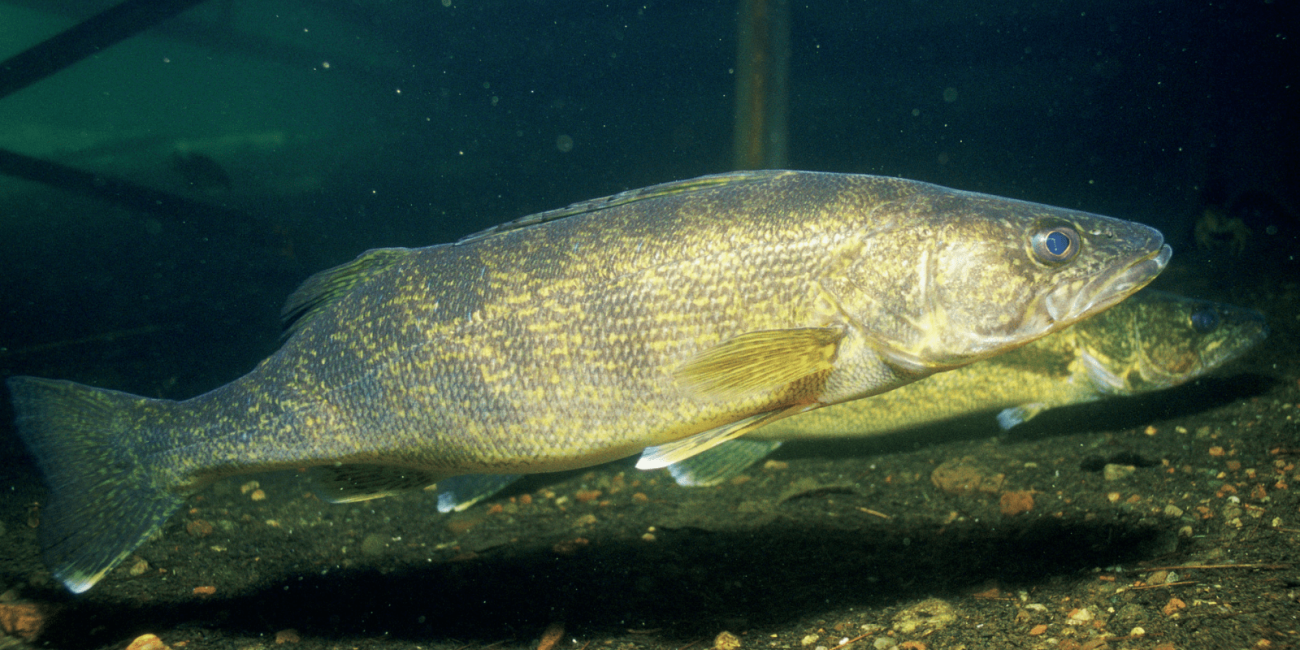
Eric Engbretson / USFWS · Public domain
Species guide
Walleye
Sander vitreus
A low-light percid with a long body, separated dorsal fins and a tail marking useful in field comparison.
Habitat
Cool rivers, natural lakes and reservoirs, in clear or turbid and shallow or deep water.
Habitat supports a shortlist; it does not prove an identity. Water bodies change seasonally, and introduced populations may occur outside the best-known native setting.
Range
Native to Arctic, Great Lakes and Mississippi drainage systems in North America; introduced elsewhere on the continent.
Check a current state, provincial or national fisheries record before making a high-confidence range claim. Drainage boundaries are more informative than political borders.
Compare carefully
Sauger may occur in the same waters. Look for cheek scaling, body blotches and the walleye’s white lower tail tip.
When a decisive structure is hidden, record the observation as probable or unresolved. An honest uncertainty is more useful than a precise label built from incomplete evidence.
Responsible observation
Photograph the cheek, both dorsal fins and the whole tail; glare can erase the reflective eye and fine scales.
For a live fish, prepare the camera first, use wet hands when handling is unavoidable, support the body and return it promptly according to local rules.