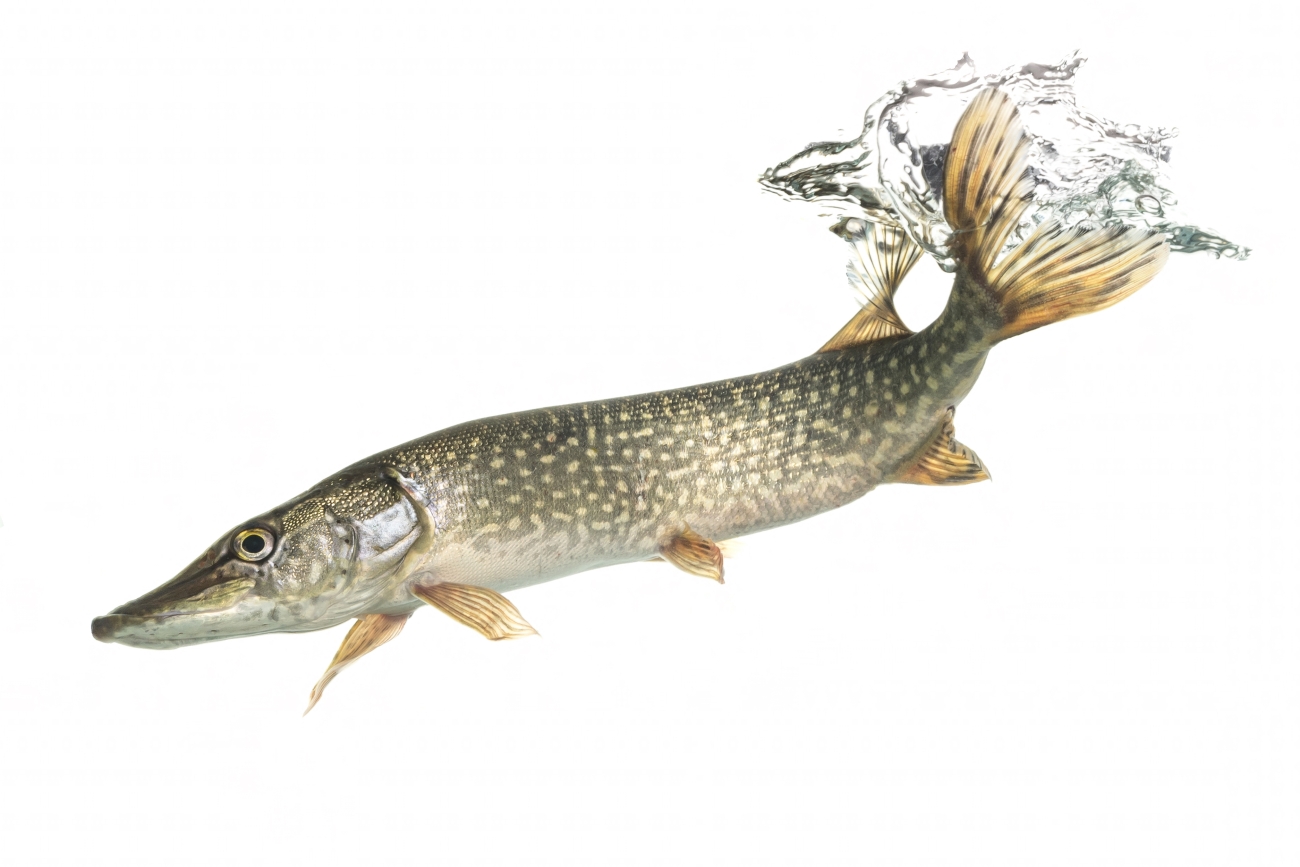
Sam Stukel / USFWS · Public domain
Species guide
Northern Pike
Esox lucius
A long-bodied ambush predator whose rear-set fins and duckbill-like snout are stronger clues than overall color.
Habitat
Vegetated lakes, quiet pools, backwaters, rivers and reservoirs.
Habitat supports a shortlist; it does not prove an identity. Water bodies change seasonally, and introduced populations may occur outside the best-known native setting.
Range
Across northern parts of North America, Europe and Asia, with introduced populations outside parts of the native range.
Check a current state, provincial or national fisheries record before making a high-confidence range claim. Drainage boundaries are more informative than political borders.
Compare carefully
Muskellunge and pickerels can overlap in silhouette. Record cheek scaling, side pattern and tail shape when local alternatives are possible.
When a decisive structure is hidden, record the observation as probable or unresolved. An honest uncertainty is more useful than a precise label built from incomplete evidence.
Responsible observation
Keep hands away from the mouth. A water-level photograph of the full side and tail is more useful than a close portrait.
For a live fish, prepare the camera first, use wet hands when handling is unavoidable, support the body and return it promptly according to local rules.